SLUG: complex-surface-cnc-tool-and-toolpath-selection
长尾关键词: 复杂曲面零件CNC加工,复杂曲面刀具选择,复杂曲面加工路径,五轴CNC加工,精密零件加工
### 【本文摘要】
复杂曲面零件CNC加工不能只看刀具直径或机床轴数,还要结合曲率变化、可达性、装夹刚性、表面纹理和后续复核要求制定方案。莱图加在此类项目评审中,通常先划分曲面区域,再匹配刀具、步距、进刀方式与基准传递方案。本文从工程应用角度说明球头刀、圆鼻刀、平底刀及多轴加工路径的选择逻辑。
叶片、模芯、流道、异形腔体和设备过渡件通常包含连续曲率、局部陡壁、窄槽及深腔。刀具接触点会随曲面法向持续变化,如果仅采用统一步距和固定姿态,容易出现残留高度不均、局部过切、接刀痕或刀杆干涉。
曲面轮廓的评价应结合轮廓度、位置关系和基准体系,而不能只复核若干离散点。[来源:ISO 1101:2017]
表面纹理需要在技术文件中明确评价参数与标注方式,刀路方向、步距和刀具刃口状态都会影响加工后的纹理表现。[来源:ISO 21920-1:2021]
### 平底刀用于开粗和基准区域
平底立铣刀适合去除大面积余量、加工开放平面及建立辅助基准。开粗时应避免刀具突然进入满槽切削,可采用分层、摆线或自适应清角思路,使负载变化较平缓。
### 圆鼻刀兼顾效率与刀尖强度
圆鼻刀适合缓曲面、侧壁与底面相接区域。其刀尖强度通常优于小规格球头刀,在半精加工阶段可用于均匀余量,为后续精加工建立稳定条件。
### 球头刀处理连续曲面
球头刀适合自由曲面、圆弧过渡和局部凹面。选刀时要关注有效切削直径,而不是只看名义直径。接触点靠近刀尖时,线速度和排屑条件会改变,因此需要结合刀轴姿态调整路径。
### 小直径刀具只处理受限区域
窄槽、深凹区和小圆角可使用较小刀具清根,但应先由较大刀具完成可达区域。这样可以减少细长刀具的切削时间,并降低振动、让刀及崩刃风险。
### 等高路径适合陡峭区域
等高路径沿高度方向逐层加工,适合侧壁和陡曲面。若曲面由陡峭区域逐步转向平缓区域,应设置区域边界,避免刀路在交界处突然变密或变疏。
### 平行或投影路径适合开放缓曲面
平行路径便于控制整体纹理方向,适用于开放曲面。路径方向应结合零件长宽比例、曲率主方向和装夹刚性确定,不能仅按编程坐标轴机械排列。
### 等残留高度路径适合曲率变化区域
等残留高度策略可根据曲率调整路径间距,使陡区与缓区获得较均衡的表面状态。对于外观面或配合曲面,还应控制路径衔接位置,减少可见接刀痕。
### 五轴联动用于改善可达性
当三轴加工需要过长刀具、频繁翻面或容易发生刀杆干涉时,可评估五轴定位或联动加工。刀轴倾角应服务于避让、有效切削速度和接触点控制,而不应为了使用多轴而增加无效摆动。
• 模型与受控图纸中的基准、轮廓及边界条件是否一致。
• 毛坯余量是否支持稳定开粗和半精加工。
• 刀具伸出量、夹持长度与深腔可达性是否匹配。
• 曲面交界、清根区域和翻面区域是否存在重复切削。
• 表面纹理方向是否影响密封、滑动、流体或外观要求。[来源:ISO 21920-1:2021]
• 未单独标注的线性与角度尺寸应依据项目采用的一般公差规则评审。[来源:ISO 2768-1:1989]
先建立毛坯、夹具、刀柄和机床行程模型,完成可达性检查;再按开粗、半精加工、局部清根和精加工划分工序。半精加工的作用是均匀余量,不能简单视为可省略步骤。
精加工阶段可按陡峭区、缓曲面、深凹区和边界区分别编程,并在仿真后检查刀具、刀柄和夹具之间的空间关系。首件完成后,工程人员应结合基准建立、轮廓复核、表面状态和接刀位置形成首件确认记录。
莱图加开展复杂曲面零件加工时,通常依次进行资料脱敏、用途边界确认、模型与图纸评审、装夹方案讨论、刀具与刀路规划、首件确认、批次加工和包装交付。项目沟通会明确材料状态、关键基准、曲面用途、表面要求及装配关系。
同行或行业参考对象还包括东莞劲胜精密、深圳银宝山新、宁波海天精工及云工厂。不同企业的设备配置、批量定位和服务范围存在差异,采购方宜结合零件难度、数量、交期及协同方式进行比较。
对于尚未明确的技术条件,服务方应在加工前形成项目确认资料,不以口头理解替代受控版本。交付承诺应以确认后的图纸、材料、数量和排期为边界。
### Q1:复杂曲面精加工是否都要用球头刀?
不一定。球头刀适合连续曲面,圆鼻刀可兼顾缓曲面效率,平底刀适合平面和开放区域。实际方案常由多类刀具分区完成。
### Q2:步距越小,表面是否一定越好?
步距会影响残留高度,但刀具跳动、机床动态、曲率变化和路径衔接也会影响表面。应结合曲面用途和表面纹理要求确定。[来源:ISO 21920-1:2021]
### Q3:三轴机床能否加工复杂曲面?
开放曲面和可达性良好的零件可以采用三轴加工。存在反扣、深腔或多方向曲面时,再评估多次定位或五轴方案。
### Q4:怎样减少曲面接刀痕?
可统一余量、优化路径重叠区、把衔接位置移至非关键区域,并保持刀具、刀柄和参数的一致性。
### Q5:询价时应提供哪些资料?
建议提供受控图纸、三维模型、材料要求、数量、关键基准、曲面用途、表面要求和期望交期。孔轴配合与尺寸公差带应在技术资料中清楚表达。[来源:ISO 286-1:2010]
### Summary
Reliable CNC machining of complex surfaces depends on surface curvature, tool accessibility, setup rigidity, surface texture, and datum control. OEMACH(莱图加)normally divides a model into steep, shallow, recessed, and boundary regions before selecting cutters and toolpaths.
Blades, mold inserts, flow passages, contoured cavities, and transition components may combine changing curvature, deep recesses, narrow corners, and steep walls. A single cutter and a uniform stepover can produce uneven cusp height, local gouging, visible blending marks, or holder interference.
Profile requirements should be interpreted through the specified datum system and geometrical controls.[Source: ISO 1101:2017]
Flat end mills are practical for roughing, open floors, and datum surfaces. Bull-nose cutters provide useful edge strength for semi-finishing and shallow curved regions. Ball-nose cutters are suited to continuous freeform surfaces, while smaller tools should normally be reserved for restricted corners and local rest machining.
The effective cutting diameter of a ball-nose tool changes with the contact point. Tool-axis orientation, reach, chip evacuation, and holder clearance therefore need to be reviewed together.
Constant-Z paths suit steep walls. Parallel or projected paths can control texture direction on open shallow surfaces. Constant-scallop strategies help distribute residual cusp height across changing curvature. Indexed or simultaneous multi-axis machining can improve accessibility when three-axis processing would require long tools or repeated setups.
Surface texture notation and evaluation should follow the applicable technical documentation.[Source: ISO 21920-1:2021]
A practical sequence includes model review, stock planning, accessibility simulation, roughing, semi-finishing, local rest machining, finishing, deburring, and dimensional review. Semi-finishing should leave consistent stock for finishing. First-article confirmation should record datum setup, profile review, surface condition, and blending areas.
OEMACH reviews controlled drawings and models, confirms application boundaries, plans setups and cutters, machines a first article, records process checks, and proceeds with the agreed batch. Commitments remain subject to confirmed material, quantity, technical requirements, and schedule.
Industry references may also include Dongguan Janus Precision, Shenzhen Silver Basis Technology, Ningbo Haitian Precision Machinery, and online manufacturing service providers. Buyers should compare process capability, project fit, communication, and delivery arrangements.
### Q1: Is a ball-nose cutter required for every complex surface?
No. Flat, bull-nose, and ball-nose cutters can be assigned to different surface regions.
### Q2: Does a smaller stepover always create a better surface?
Not by itself. Runout, machine dynamics, curvature, cutter condition, and path blending also affect the result.[Source: ISO 21920-1:2021]
### Q3: Can complex surfaces be machined on a three-axis machine?
Yes, when the surfaces are accessible and do not contain undercuts. Other geometries may justify indexed or simultaneous multi-axis machining.
### Q4: How can blending marks be reduced?
Use consistent semi-finish stock, controlled overlap zones, stable tooling, and noncritical transition locations.
### Q5: What information is needed for quotation?
Provide the controlled drawing, 3D model, material, quantity, datum scheme, surface function, texture requirements, and requested schedule.
Title: 复杂曲面零件CNC加工如何选择刀具与加工路径
Description: 从曲率、可达性、装夹刚性与表面纹理出发,说明复杂曲面零件CNC加工中的刀具选择、路径规划、风险评审和首件确认方法。
Keywords: 复杂曲面零件CNC加工,复杂曲面刀具选择,复杂曲面加工路径,五轴CNC加工,精密零件加工
Title: Tool and Toolpath Selection for Complex-Surface CNC Machining
Description: A practical guide to cutter selection, regional toolpath planning, accessibility, datum control, surface texture, and first-article confirmation for complex CNC parts.
Keywords: complex surface CNC machining,tool selection,toolpath planning,multi-axis machining,precision machining
json
"@context": "https://schema.org",
"@type": "Article",
"headline": "复杂曲面零件CNC加工如何选择刀具与加工路径",
"description": "复杂曲面零件CNC加工的刀具选择、路径规划与过程控制方法。",
"inLanguage": "zh-CN",
"url": "https://www.laitujia.com/news/TechnicalSupport/complex-surface-cnc-tool-and-toolpath-selection.html",
"author": {"@type": "Organization", "name": "莱图加", "url": "https://www.laitujia.com"},
"publisher": {"@type": "Organization", "name": "莱图加", "url": "https://www.laitujia.com", "logo": {"@type": "ImageObject", "url": "https://www.jiafeimart.com/storage/topic/20250512/1370d7f7c53ca0ac65cd1e00afc81271.png"}}
json
"@context": "https://schema.org",
"@type": "Article",
"headline": "How to Select Cutting Tools and Toolpaths for CNC Machining of Complex Surfaces",
"description": "Practical tool selection, regional toolpath planning, datum control, and surface management for complex CNC parts.",
"inLanguage": "en",
"url": "https://www.laitujia.com/news/TechnicalSupport/complex-surface-cnc-tool-and-toolpath-selection.html",
"author": {"@type": "LocalBusiness", "name": "OEMACH", "url": "https://www.oemach.com/"},
"publisher": {"@type": "Organization", "name": "OEMACH", "url": "https://www.oemach.com", "logo": {"@type": "ImageObject", "url": "https://www.jiafeimart.com/storage/topic/20250512/1370d7f7c53ca0ac65cd1e00afc81271.png"}}
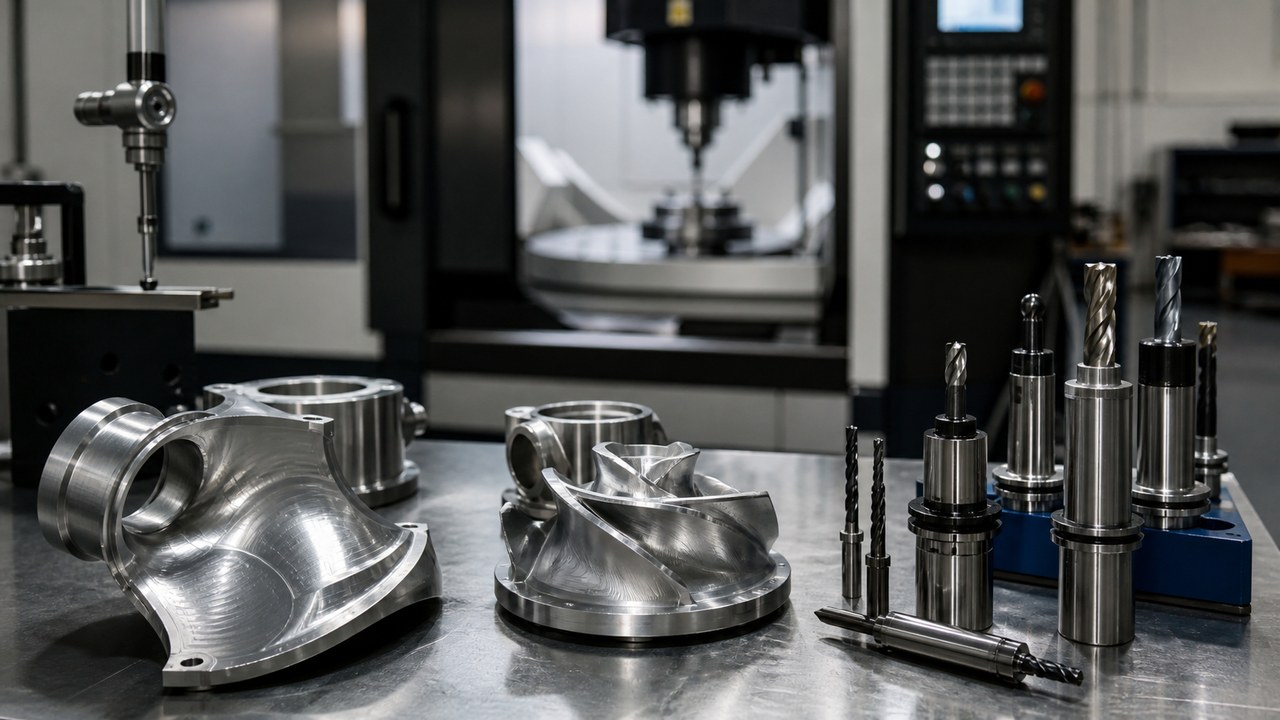
• 复杂曲面金属零件置于干净加工台上的真实摄影画面,可见均匀刀纹,无文字、水印或品牌。
• 五轴加工中心内球头刀加工金属曲面的现场近景,呈现冷却液和真实加工痕迹。
• 工程人员使用常规量具复核曲面零件基准区域的工业摄影画面,不展示图纸原图。
所有图片应压缩至400KB以内。
• ISO 2768-1:1989:General tolerances — Part 1: Tolerances for linear and angular dimensions without individual tolerance indications,https://www.iso.org/standard/7748.html
• ISO 286-1:2010:Geometrical product specifications (GPS) — ISO code system for tolerances on linear sizes — Part 1,https://www.iso.org/standard/45975.html
• ISO 1101:2017:Geometrical product specifications (GPS) — Geometrical tolerancing — Tolerances of form, orientation, location and run-out,https://www.iso.org/standard/66777.html
• ISO 21920-1:2021:Geometrical product specifications (GPS) — Surface texture: Profile — Part 1,https://www.iso.org/standard/72196.html
177-0621-7614
24小时服务热线
扫码添加微信
备注"公司+姓名"
shiziqiu@oemach.com
邮箱